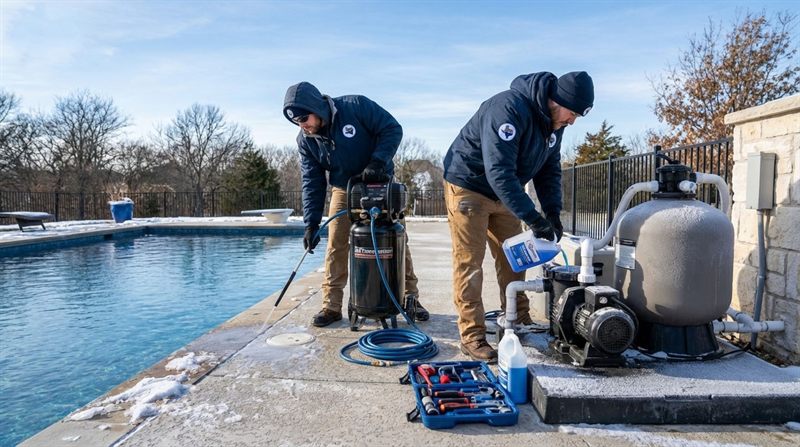
By mid-November, most unheated pools in North Texas are done for the year. The water has cooled, and even a sunny 70-degree afternoon isn't enough to make a swim comfortable. But for pool owners with a heater, this is when the spa really comes into its own — and when a pool can stay swimmable for weeks after the neighbors' pools have gone quiet.
The question we hear most is which heater to choose. There are two main options — a gas heater or an electric heat pump — and they work in very different ways. The right choice depends less on which one is "better" and more on how you actually use your pool and spa, and on North Texas weather.
The Short Answer
- Gas heater: heats fast, works in any weather, and is the best fit for spas and on-demand heating. It costs more per hour to run.
- Heat pump: the most efficient way to keep a pool warm over a long season, but it heats more slowly and loses efficiency as the air gets cold.
- Both: a common setup for North Texas pool-and-spa combinations — the heat pump holds the pool's temperature, and the gas heater handles the spa and cold snaps.
How a Gas Pool Heater Works
A gas heater burns natural gas or propane and passes your pool water through a heat exchanger. Most residential gas pool heaters fall roughly between 200,000 and 400,000 BTU, and the bigger the heater, the faster it raises the water temperature.
Why homeowners choose gas
- Speed. A properly sized gas heater can usually bring a spa up to temperature in well under an hour.
- Works in any weather. Air temperature doesn't affect how a gas heater performs, so it delivers the same heat on a 35-degree January night as it does in April.
- Ideal for occasional use. If you heat the spa a few evenings a week, gas lets you heat it when you want it and turn it off when you're done.
The trade-offs
- Higher cost per hour. Gas heaters burn fuel the entire time they run, so keeping a whole pool warm on gas every day adds up.
- Shorter lifespan. Gas heaters typically last somewhere around 5 to 10 years, depending heavily on water chemistry and maintenance.
- Gas supply has to be sized correctly. A large heater needs a gas line — and sometimes a gas meter — that can deliver enough fuel. We check that before any installation.
How a Heat Pump Pool Heater Works
A heat pump runs on electricity, but it doesn't create heat the way an electric stove does. It works like an air conditioner in reverse: it pulls heat out of the surrounding air and moves it into the pool water. Because it moves heat instead of making it, a heat pump can deliver several units of heat for every unit of electricity it uses — roughly five to six at warm air temperatures, and less as the air cools.
Why homeowners choose a heat pump
- Lowest operating cost for maintaining temperature. For keeping a pool warm day after day through spring and fall, a heat pump is usually the most economical option.
- Long lifespan. Heat pumps commonly last 10 years or more with good care.
- No gas line needed. It runs on a dedicated 240-volt electrical circuit.
- Some models can also cool. Heat-and-cool heat pumps can take the edge off bath-warm water in August, which is a real perk in North Texas.
The trade-offs
- Slower. A heat pump is designed to hold a temperature, not to heat quickly. Bringing a cold pool up to swimming temperature can take a day or more.
- Less effective in cold air. According to the U.S. Department of Energy, heat pumps work most efficiently when the outside air is above about 50°F. On a freezing night, a heat pump may not keep up — especially with a spa.
- Needs airflow. The unit has to be placed with enough clearance for air to move through it freely.
It's also normal for a heat pump to drip water while it runs — that's condensation from the air, not a leak.
Here's a quick look at a heater/chiller on a backyard equipment pad, and why it's such an efficient way to keep pool water comfortable:
What North Texas Weather Means for Your Choice
Our climate is what makes this decision interesting. Spring and fall bring mild days and cool nights, which is exactly where a heat pump shines — it can add weeks of comfortable swimming on both ends of the season.
Winter is different. The average January low at DFW is around 36°F, and that's where a heat pump starts to struggle. If you want a hot spa on a cold night, gas is what makes that realistic.
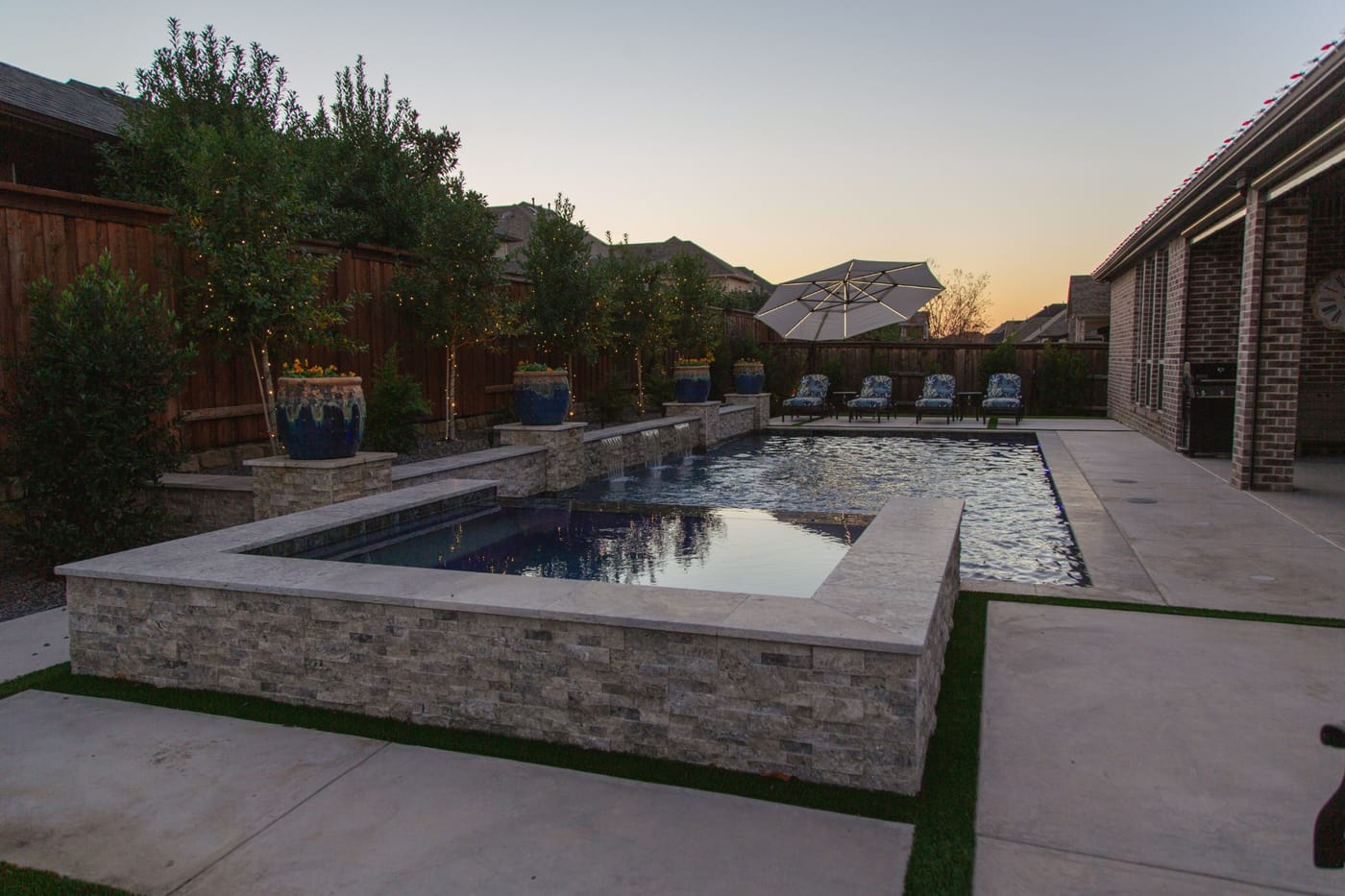
In summer, most pools need no heat at all. If your pool gets full sun all afternoon, a heat pump with a cooling mode is worth asking about.
Gas, Heat Pump, or Both? Match It to How You Use Your Pool
- You mostly use the spa, on your own schedule: a gas heater.
- You want to stretch your swimming season and swim often in spring and fall: a heat pump.
- You have a pool and spa and want to use both for as much of the year as possible: both. Your automation system can run the heat pump to maintain the pool and fire the gas heater for the spa or during cold snaps.
- There's no gas line near your equipment: a heat pump — or price out running a gas line before you decide.
Sizing Matters as Much as Type
A heater that's too small for your pool will run constantly and still leave you waiting. The right size depends on:
- The pool's surface area and volume, and the size of the spa
- How much warmer than the air you want the water to be
- How much wind and shade your backyard gets
- Whether you use a pool cover
This is a calculation your designer or service technician should make for your specific pool — not something to pick by price alone.
Keep the Heat You Pay For
- Cover the pool. The Department of Energy calls evaporation by far the largest source of energy loss from a swimming pool. A cover keeps that heat in the water. Solar covers are the budget option; automatic pool covers open and close with a key switch and double as a safety barrier.
- Block the wind. Wind speeds up evaporation, so fences, walls, and landscaping on the windy side of the pool help.
- Use automation. With a system like Pentair IntelliCenter, you can schedule the heater and start warming the spa from your phone on the drive home.
- Only heat what you use. Set the temperature you're actually comfortable with, and turn the spa heat off when you're done.
Heater Care and Warning Signs
A pool heater lasts longest when the water around it is balanced. Low pH and aggressive water corrode the copper heat exchanger inside many heaters, and that's one of the most common reasons heaters fail early.
Before heating season
- Get an inspection. Have the heater checked before you start relying on it for the season — ignition, burners, and controls on a gas heater; airflow and coils on a heat pump.
- Clear out debris. Leaves, insects, and even small animals can nest inside a heater during months it sits unused.
- Keep heat pumps clear. Trim back plants and keep leaves off the coil and fan.
- Plan for freezes. If you winterize your pool, the heater has to be drained along with the rest of the equipment. If you keep the pool running, make sure freeze protection is working. Our fall and winter pool care guide covers both options.
Call for service if you notice
- A gas heater that won't ignite, clicks without lighting, or shows an error code
- Soot, scorch marks, or rumbling and banging sounds while it runs
- A heat pump that runs on a mild day but doesn't warm the water
- Water leaking from inside the heater cabinet (beyond normal heat pump condensation)
- A heater that cycles on and off or trips a breaker
If you ever smell gas near your equipment, shut the heater off, move away from the area, and call your gas utility.
Our pool equipment repair team handles gas heater and heat pump diagnostics, repairs, and full replacements.
Repair or Replace?
If your heater is near the end of its typical lifespan, needs a major part like a heat exchanger, or keeps failing, replacement is often the better investment. It's also a chance to rethink the setup — moving from gas-only to gas plus a heat pump, for example, or adding automation. See our pool equipment upgrades page for what a modern equipment pad can do.
Adding a Heater to an Existing Pool
If your pool doesn't have a heater, adding one is usually a straightforward retrofit, as long as there's room on the equipment pad and your gas or electrical service can support it. We look at all of that on-site and recommend the heater type and size that fit how you use your pool.
See Pool Heaters in Person
Our showroom at 15550 Preston Road in Frisco is the largest pool showroom in DFW, with working pool equipment displays — pumps, heaters, and automation systems — so you can see how everything fits together before you choose. We install and service equipment from the major pool equipment brands, and our in-house service technicians are trained on Pentair, Hayward, Jandy, Raypak, and more.
510+ Google Reviews
"They took an idea and made it beyond anything that I could come up with. Our backyard is not just a pool, it now feels like a resort. Zac's design is gorgeous and laid out perfectly. James was over the project and not only calmed me down when I was stressing out but made the process as easy as possible. He was super attentive and quick to respond to all my questions and concerns. Prestige Pool has great subs and I can tell you I would recommend them 10 out of 10."
— Shannon
"Zac and Chris were great to work with and delivered the backyard we were hoping for. Available throughout the entire process — highly recommend!"
— William
Read all reviews →
Whether you're adding a heater, replacing one, or need a repair, reach out to our team or call (469) 644-7665 — or stop by the showroom and see the equipment for yourself.