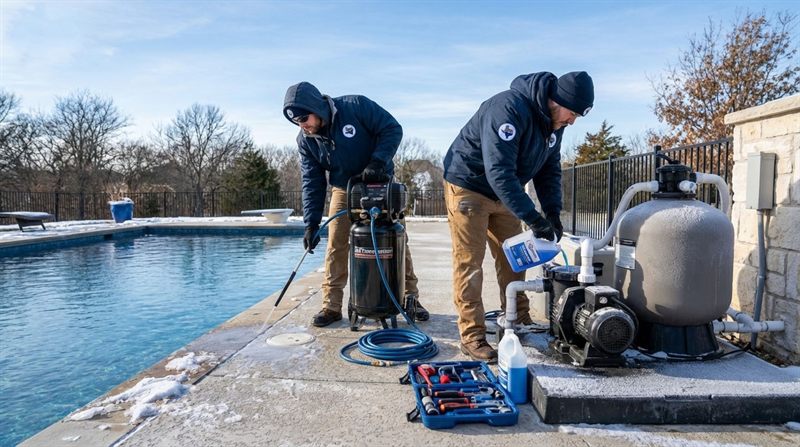
In North Texas, summer doesn't ease in — it arrives. One week you're in a light jacket during oak pollen season, the next it's 95 degrees and the kids want in the water *today*. That fast ramp from cool spring to full DFW heat is exactly why getting your pool ready early matters here more than it does almost anywhere else.
Our spring is short and messy: heavy oak and cedar pollen coats everything, big day-to-night temperature swings stress your water chemistry, and the first real heat wave can turn a neglected pool green in a matter of days. Whether your pool sits on a big lot in Prosper or Celina, in an established Plano or Allen backyard, or in a master-planned community in Frisco or McKinney, the spring routine is the same. The good news is that a proper pool opening is straightforward if you work through it in order. Here's how to get your North Texas pool summer-ready — step by step — and how to tell when it's time to hand it off to a pro.

Step 1: Uncover and Inspect
Start by removing the cover. Before you bunch it up and toss it in the shed, clean it off — sweep or blow away the leaves, pollen, and debris that built up over winter, then rinse and let it dry completely before storing. A cover put away wet is a cover that comes back moldy next fall.
With the cover off, take a slow walk around the pool and look for winter damage:
- Cracks or chips in the tile, coping, or deck — North Texas freeze-thaw cycles are hard on surfaces.
- Loose or hollow-sounding tile around the waterline.
- Visible cracks in the plaster or any soft spots in the deck.
- Damage to the skimmer, returns, or any visible plumbing.
- Equipment that looks cracked, corroded, or like it took on water.
Catching a small issue now — a hairline crack, a loose tile — is far easier and cheaper than discovering it mid-summer when the pool is full and in use.
Step 2: Check Water Level and Get It Moving
Over the winter, evaporation and splash-out usually drop the water level. Top it off until the water sits about halfway up the skimmer opening — that's the sweet spot for proper skimming and circulation. Too low and your pump can run dry; too high and the skimmer can't do its job.
Once the level is right, it's time to get the water circulating again. If you closed the pool with the equipment off, prime the pump before you start it: make sure it's full of water so it isn't running dry on startup. Open your valves, switch the system on, and confirm water is actually moving — you should see return jets pushing water back into the pool. Circulation is everything. Stagnant water is how a pool turns green; moving water is how chemicals distribute and the filter does its work.
Step 3: Deep Clean
Now that the water is moving, give the pool a thorough cleaning before you start balancing chemistry — there's no point balancing water that's full of debris.
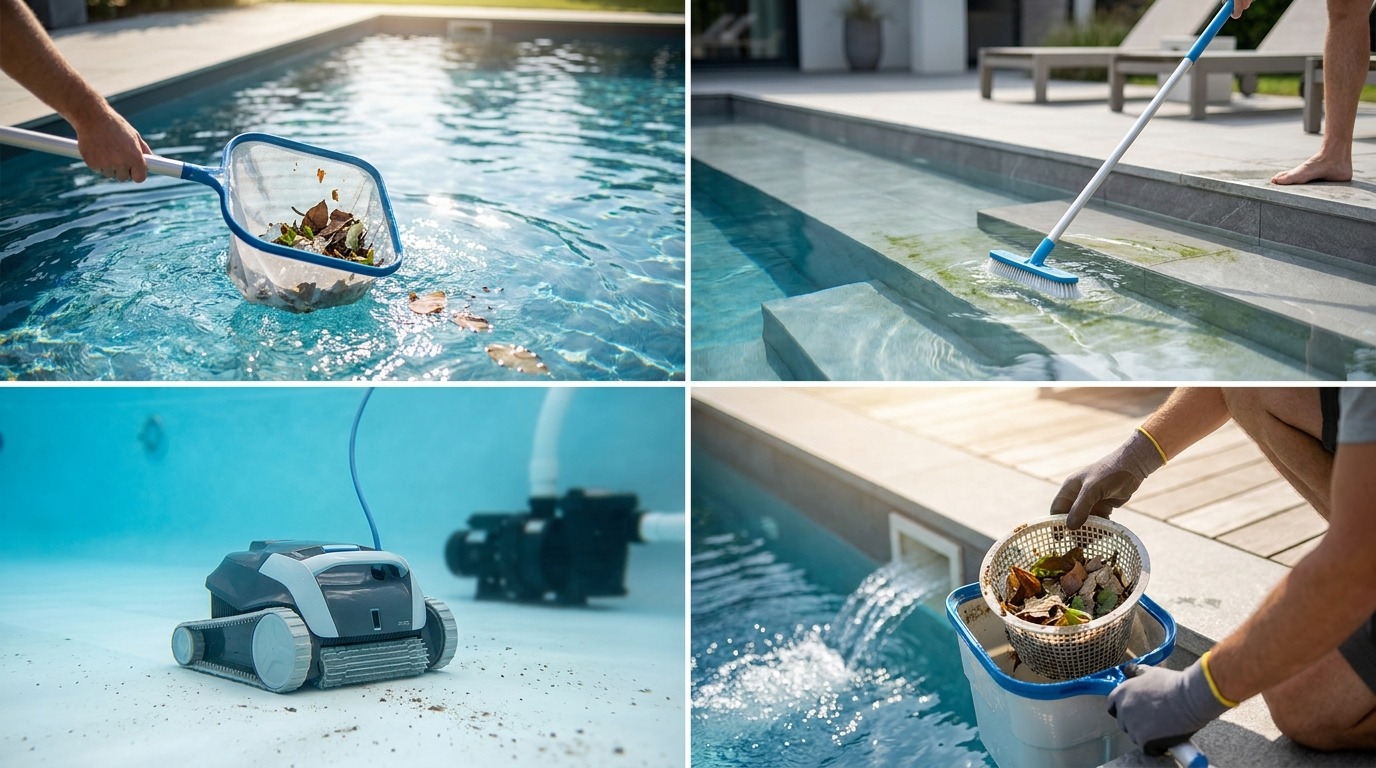
- Skim the surface to pull off floating leaves and pollen.
- Brush the walls, steps, and tile line to knock loose any algae or buildup that settled over the off-season. Pay special attention to corners and shaded spots where algae likes to start.
- Vacuum the floor, either with a manual vac or by running your automatic/robotic cleaner.
- Empty the baskets — clean out both the skimmer basket and the pump basket. They're often packed with debris after winter, and a clogged basket chokes your circulation.
Step 4: Balance the Water
With the pool clean and circulating, test and balance the water. This is the step that separates a crystal-clear summer from a constant battle, and after a North Texas spring — pollen, runoff, and wide temperature swings — your chemistry is almost always out of range.
Test the water and adjust toward these targets, in this order:
- pH — keep it in the slightly-basic comfort zone (roughly 7.4–7.6). pH that drifts too high or too low makes everything else less effective and can irritate skin and eyes.
- Total alkalinity — this is pH's stabilizer. Get it into range first (generally around 80–120 ppm) and your pH becomes much easier to hold steady.
- Sanitizer — your chlorine (or salt-system output) needs to be at an effective level to keep the water safe and clear.
A few principles to work by: balance alkalinity before fine-tuning pH, add chemicals with the pump running so they distribute, and retest after the water has circulated rather than chasing numbers minute to minute. We're keeping this general on purpose — exact dosing depends on your pool's size, surface, and current readings, and over-correcting is a common way to make things worse. If the numbers are far off or you're not sure where to start, that's a good moment to bring in a CPO-certified tech.
Step 5: Check Your Equipment
A summer pool is only as reliable as the equipment running it. Before the heat hits and you're depending on the system daily, give the equipment pad a real once-over:
- Pump — listen for grinding, rattling, or unusual noise, and look for leaks or drips around the housing and fittings. A pump that's loud or leaking now will fail at the worst possible time.
- Filter — clean or backwash it so you're starting the season fresh. A filter clogged with last season's debris can't keep your water clear no matter how good your chemistry is. Check the pressure gauge against the normal range for your system.
- Heater — if you have one, fire it up and confirm it ignites and heats. It's better to find a problem on a mild June morning than the night before a pool party.
- Automation — test your controls, timers, lights, and any app or panel. Make sure schedules are set for summer runtimes and everything responds the way it should.
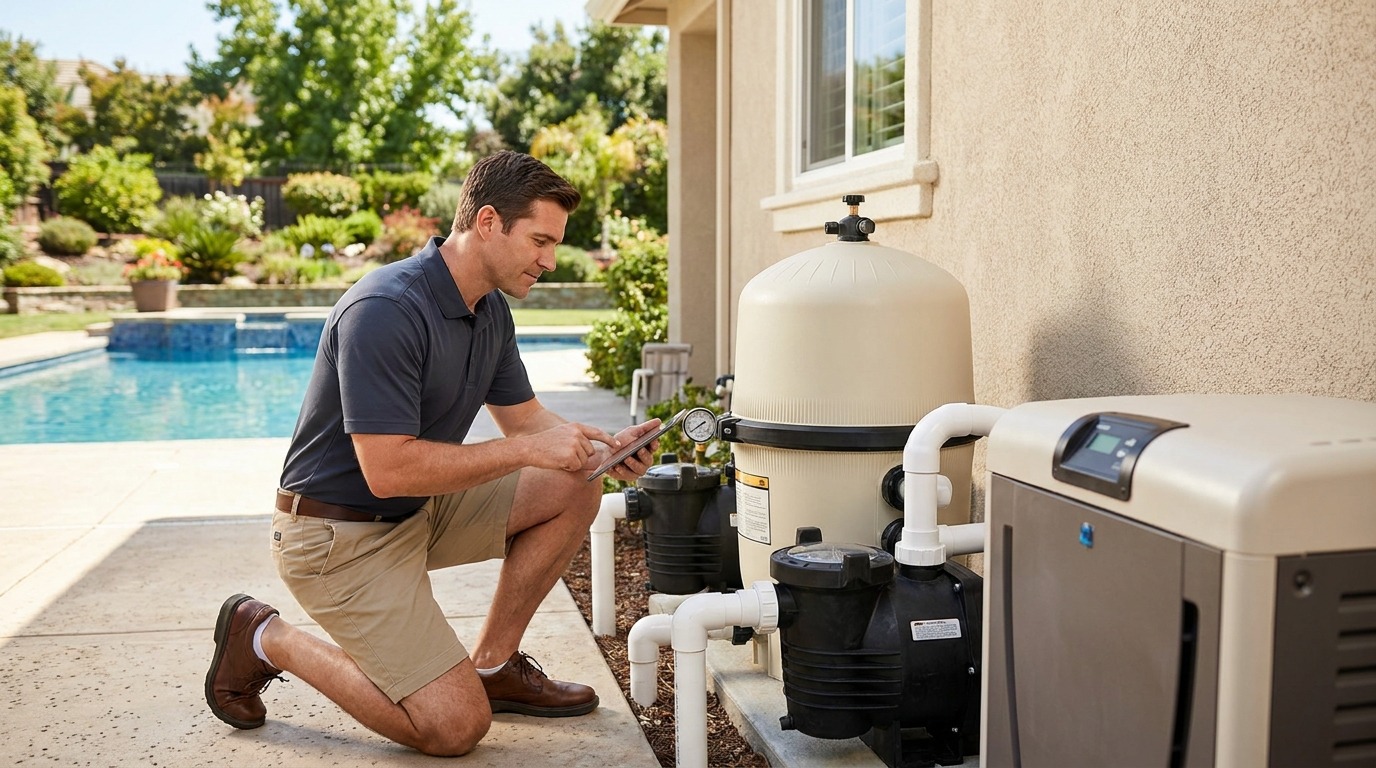
Pool equipment is a system, and the components depend on each other. If something seems off — a noise you can't place, pressure that won't settle, a heater that won't light — it's worth a professional look before small issues cascade into bigger ones. Our team works with Pentair, Hayward, and Fluidra equipment every day and can diagnose the pad quickly.
Step 6: Run, Clear, and Enjoy
With the pool clean, balanced, and the equipment confirmed, the last step is patience. Run your filtration long enough to fully clear the water — often a full day or more of extended runtimes after opening, especially if the water started cloudy or you needed to bring sanitizer up. Keep brushing and skimming as it clears, retest your chemistry once it's circulated, and let the filter do its job.
When the water turns from hazy to genuinely clear — that crisp, see-the-bottom sparkle — you're done. That's the payoff for doing the steps in order: a pool that's ready for the long DFW summer instead of one you're fighting all season.
When to Call a Pro
Plenty of North Texas homeowners open their own pools, and if the steps above sound manageable, go for it. But there are good reasons to hand it off:
- The numbers won't balance, the water stays cloudy or green, or you're guessing on chemistry.
- You found winter damage — cracked tile, plaster issues, deck cracks, a suspected leak.
- Equipment is noisy, leaking, won't start, or the heater won't fire.
- You'd simply rather spend your first warm weekend *in* the pool than working on it.
At Prestige, our pool service and maintenance team handles the whole opening for you — and we keep it dialed in all season so you never have to think about chemistry or circulation again. We do it every spring for homeowners across Frisco, Prosper, McKinney, Plano, Allen, and Celina, all from our Frisco headquarters. If your pool was closed for the winter, our pool opening service is the fastest way to a swim-ready backyard. Want to understand the bigger picture of owning a pool in North Texas? Our Pool Owner's Guide walks through maintenance, equipment, and seasonal care in plain English.
However you get there, the goal is the same: a clean, balanced, worry-free pool for the months that matter most. Reach out to our team or call (469) 644-7665 and we'll get you summer-ready.