Winterization
Pool Winterization Services in North Texas
Protect your pool from North Texas freezes. We handle plumbing blowout, chemical treatment, equipment protection, and cover installation — so your pool is safe all winter.
Our Process
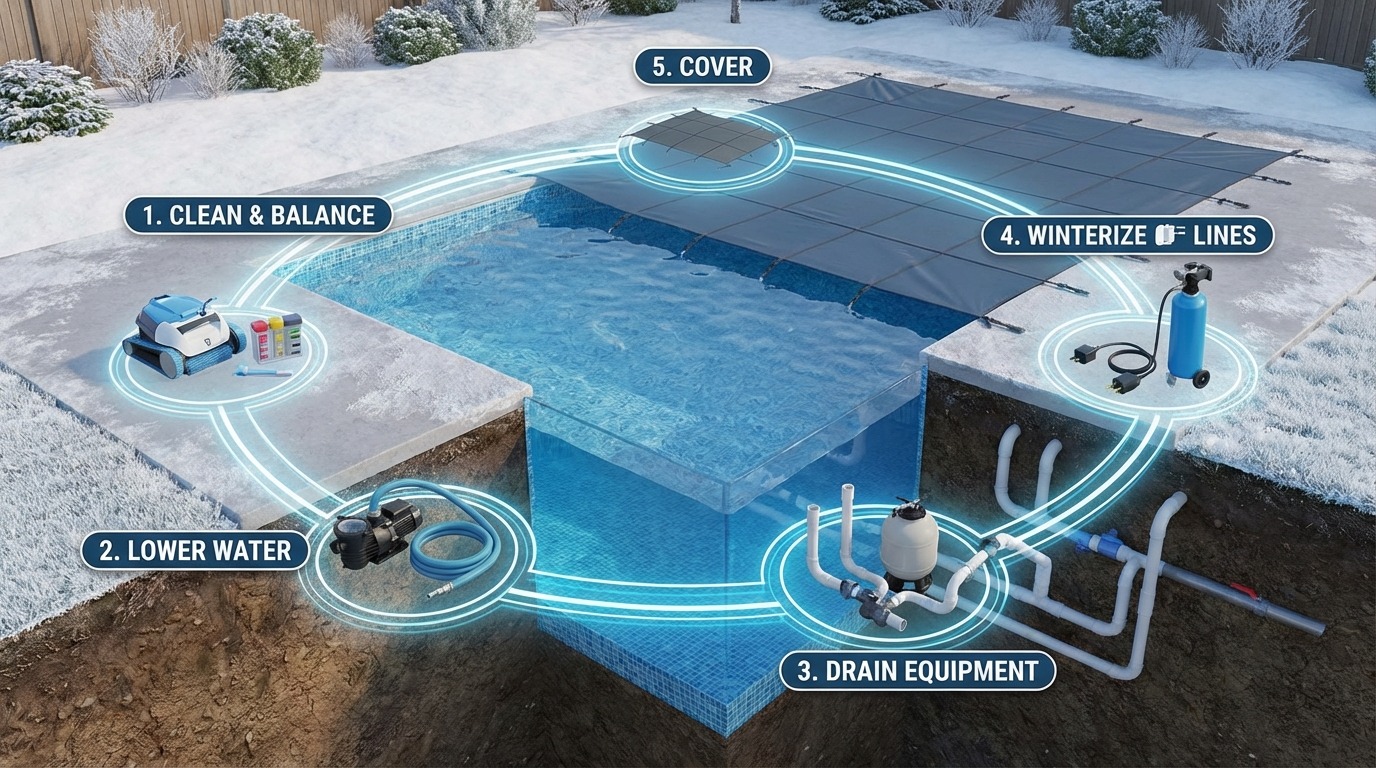
How We Winterize Your Pool
A thorough, step-by-step process that protects every component of your pool from freeze damage.
Balance & Treat the Water
We adjust pH, alkalinity, and calcium hardness, then add winterizing chemicals to prevent algae growth and staining during the off-season.
Lower the Water Level
Water is lowered below the skimmer and return fittings to prevent freeze damage to the tile line and exposed plumbing.
Blow Out the Plumbing Lines
Compressed air is used to force all water out of suction lines, return lines, and equipment — the most critical step for freeze protection.
Protect Equipment & Cover
Plugs are installed in all fittings, equipment is drained and secured, and a safety cover or winter cover is installed over the pool.
Why It Matters
Why Winterization Is Essential in North Texas
North Texas isn't the frozen tundra, but sudden hard freezes can cause serious — and expensive — damage to unprotected pools.
North Texas experiences sudden, hard freezes that can crack pipes, fittings, and pool shells in a single night
Freeze-thaw cycles throughout winter expand and contract water in plumbing — even small amounts of trapped water can cause thousands in damage
Pool equipment (pumps, filters, heaters) is especially vulnerable to freeze damage when water sits inside
Proper winterization preserves your plaster, tile, and coping from freeze-related cracking and delamination
Algae prevention during the off-season means a faster, cleaner spring opening
Common Questions
Pool Winterization FAQ
When should I winterize my pool in North Texas?
We recommend winterizing in late November, before the first hard freeze. North Texas weather is unpredictable — early freezes can happen in November, so it's best not to wait until December.
Do I need to winterize if I have a freeze guard on my equipment?
Freeze guards help protect equipment when temperatures drop, but they only work when power is on. A power outage during a freeze can still cause major damage to plumbing and equipment. Full winterization is the only reliable protection.
Can I leave my pool running all winter instead of winterizing?
Some homeowners choose to keep their pool running through winter, which can work as long as the pump runs continuously during freezes. However, this relies on uninterrupted power and increases energy costs. Winterization is the safer, more cost-effective option for most pool owners.
How much does pool winterization cost?
Winterization pricing depends on pool size, plumbing complexity, and whether you need a cover installed. Contact us for a quote — existing service customers receive priority scheduling and preferred pricing.
When can I reopen my pool after winter?
Most North Texas pool owners open their pools between mid-March and mid-April, once overnight temperatures consistently stay above 50°F. Opening too early means higher chemical costs; waiting too long can lead to algae growth under the cover.
Ready to Protect Your Pool This Winter?
Schedule your winterization before the first freeze. We'll make sure your pool is safe, sealed, and ready for spring.