What Is CPO Certification?
CPO stands for Certified Pool/Spa Operator. It is a nationally recognized certification administered by the Pool & Hot Tub Alliance (PHTA). The CPO program trains individuals to properly operate and maintain pools and spas, with a focus on water chemistry, filtration systems, safety, and health code compliance.
CPO certification has been the industry standard credential for pool professionals since 1972. Over a million people have earned the certification worldwide, and it is recognized by health departments and regulatory agencies across the United States.
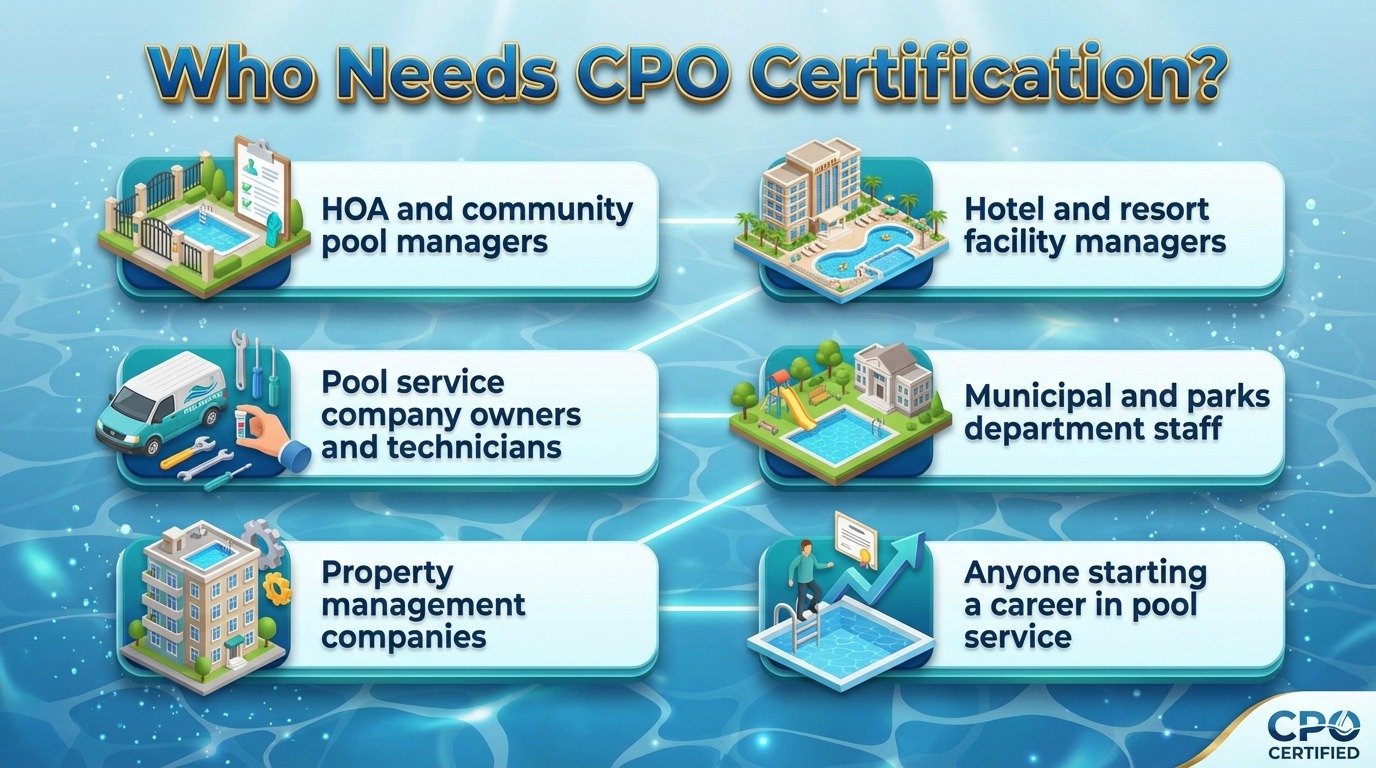
Who Needs CPO Certification?
CPO certification is required or strongly recommended for a wide range of professionals:
- HOA and community pool managers — Many municipalities require at least one CPO certified operator on staff for any commercial or community pool.
- Hotel and resort facility managers — Health departments in most Texas counties require certified operators for hotel pools and spas.
- Pool service company owners and technicians — CPO certification sets your business apart and demonstrates expertise to clients.
- Municipal and parks department staff — Public pools and aquatic facilities typically require certified operators by law.
- Property management companies — If you manage apartment complexes or multifamily communities with pools, CPO certification is often mandatory.
- Anyone starting a career in pool service — CPO certification is the fastest way to gain credibility and foundational knowledge in the industry.
Even residential pool owners benefit from CPO-level knowledge. Understanding water chemistry, equipment operation, and proper maintenance saves money on chemical costs, extends equipment life, and keeps your pool safe for your family.
What Does the CPO Course Cover?
The CPO curriculum is comprehensive and covers everything needed to operate a pool or spa safely and in compliance with local health codes:
Water Chemistry and Balance
The chemistry module is the heart of the CPO course. You will learn how to test and balance pH, total alkalinity, calcium hardness, cyanuric acid, and total dissolved solids. You will understand the Langelier Saturation Index and how to use it to prevent scale buildup and corrosion. This knowledge is what separates a trained operator from someone who just dumps chlorine in the pool.
Sanitization and Disinfection
CPO covers chlorine chemistry, bromine systems, salt chlorine generators, UV systems, and ozone treatment. You will learn how each system works, proper dosing, and how to troubleshoot common issues like chlorine lock, combined chlorine problems, and algae outbreaks.
Filtration and Circulation
You will learn how sand filters, cartridge filters, and DE (diatomaceous earth) filters work — including flow rates, turnover requirements, pressure readings, and maintenance schedules. Circulation design, skimmer function, and return placement are all covered.
Equipment Operation
The course covers pumps, heaters, automation controllers, chemical feeders, and lighting systems. You will learn how to read equipment specifications, calculate energy costs, and troubleshoot common equipment failures.
Health Code Compliance
Every state and many municipalities have specific health codes for commercial pools. CPO training covers the Model Aquatic Health Code (MAHC), ADA requirements, signage rules, record-keeping obligations, and how to pass health department inspections.
Risk Management and Safety
Drowning prevention, emergency action plans, chemical safety, electrical safety, and entrapment prevention (Virginia Graeme Baker Act) are all part of the curriculum.
How Long Does CPO Certification Last?
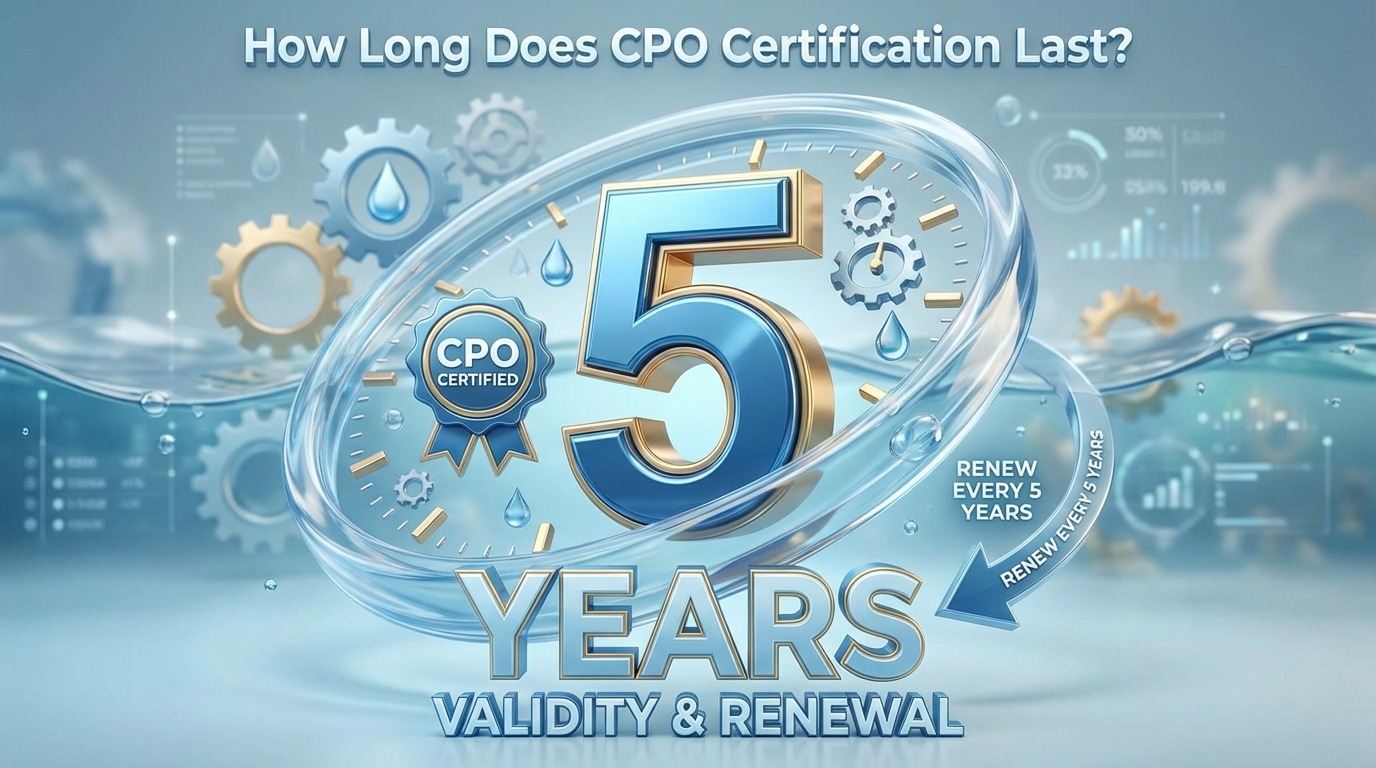
CPO certification is valid for 5 years from the date you pass the exam. After 5 years, you must renew by retaking the course and exam. The renewal requirement ensures that certified operators stay current with evolving regulations, new technology, and updated best practices.
How to Get CPO Certified
CPO courses are taught by authorized instruction providers across Texas. The Pool & Hot Tub Alliance maintains the official directory of upcoming classes, locations, and instructors.
What to Expect
- Format: 2-day in-person course plus certification exam
- Includes: Full course instruction, all study materials, and the certification exam
- Credential: Certified Pool/Spa Operator, valid for 5 years from the exam date
You do not need any prior experience to take the class. The CPO course is designed for both newcomers and experienced professionals. Whether you are a facility manager who has never maintained a pool or a veteran service technician looking to formalize your knowledge, the course provides real value.
Why Prestige Invests in CPO
At Prestige, CPO certification is not just a line item on a resume — it is part of how we operate. Our service technicians hold CPO credentials, and our team stays current with the latest training and certifications. When we service a pool — residential or commercial — our clients know they are getting technicians who understand the science behind proper pool care.
That investment in certification is part of how we raise the bar for pool care across North Texas. Whether we are maintaining a backyard pool, a community amenity, or a commercial facility, the standard is the same.
Want CPO-Certified Pool Care?
You do not need to be certified yourself to benefit from someone who is. Prestige's service technicians hold CPO credentials, and that training shows up on every visit — balanced water, clean filtration, and equipment that runs the way it should. Learn more about our pool service and maintenance, or call us at (469) 644-7665.