Why Water Features Matter
Water features are the single fastest way to take a pool from "nice" to "unforgettable." They add movement, sound, and visual interest — and at night, when paired with LED lighting, they turn your backyard into something that feels like a resort.
But not all water features are created equal. The right choice depends on your pool design, your lot, your budget, and honestly, your personality. Some homeowners want the subtle trickle of a sheer descent. Others want a full rock waterfall with a grotto they can sit behind. Both are legitimate — and we build both.
Here's a breakdown of every type of pool water feature we design and build at Prestige Pool & Patio, plus what each one costs, how it works, and what to think about before you commit.
Types of Pool Water Features
Sheer Descents
A sheer descent is a thin, smooth sheet of water that falls from a raised wall, ledge, or beam into the pool. It's clean, modern, and architectural. Most sheer descents are 12 to 48 inches wide — we often install them in groups of two or three along a back wall for a symmetrical look.
The hardware is a stainless steel or plastic lip mounted inside the wall with plumbing running behind it. A dedicated pump (or a line off your main pump with a valve) controls the flow. You can adjust the arc — from a gentle curtain to a more projected stream — depending on the unit and water pressure.
Sheer descents are one of the most popular water features in new pool builds across Frisco, Prosper, and McKinney. They pair well with geometric and modern pool designs, and they look incredible at night with LED backlighting.

Rain Walls
A rain wall takes the concept further — instead of one or two streams, you get a full curtain of water falling from a structure above the pool. We've built rain walls that cascade from pergolas, from raised beam walls, and from custom-fabricated metal structures.
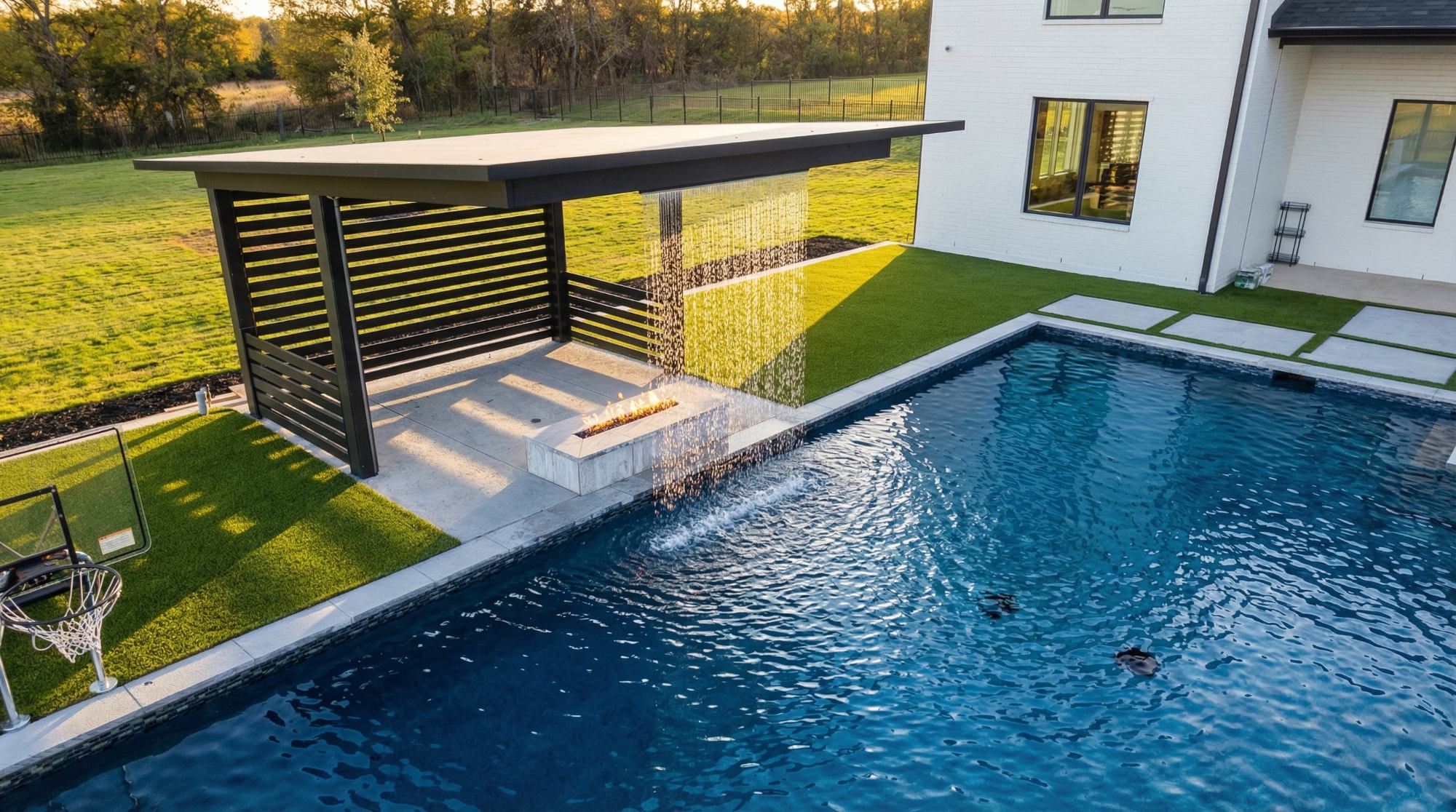
Rain walls make a statement. They create a visual and audio barrier that makes the pool area feel more private and immersive. The sound of falling water masks neighborhood noise — lawnmowers, traffic, neighbors — and creates a genuinely relaxing atmosphere.
The plumbing is more involved than a sheer descent. Rain walls require a dedicated pump circuit, a supply manifold mounted inside or along the structure, and careful water distribution to get an even curtain. The return water increases your pool's circulation, which is a bonus for water quality.
Spillover Spas
A spillover spa is technically a separate body of water — an elevated hot tub built adjacent to the pool — with the edge designed so water flows over the rim and cascades into the pool below. It's both a functional spa and a dramatic water feature.
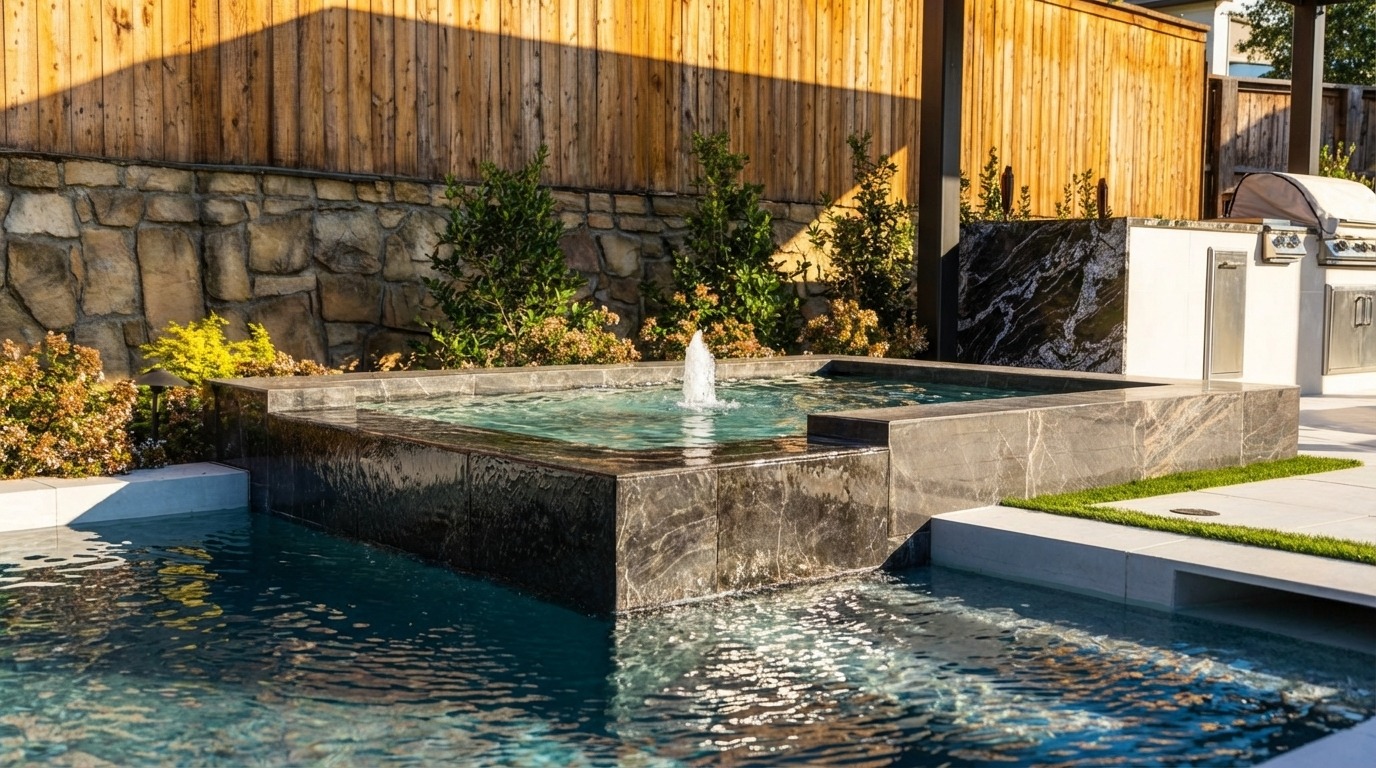
The spillover edge can be a smooth vanishing edge (for a mirror effect), a rough natural stone edge (for a rock waterfall look), or a series of scuppers built into the spa wall. When the spa jets are running, the increased water movement creates a more dynamic cascade.
Spillover spas are one of the highest-value features we build. You get a hot tub for year-round use, a water feature for visual and audio impact, and a design element that adds vertical dimension to the pool layout.
Rock Waterfalls
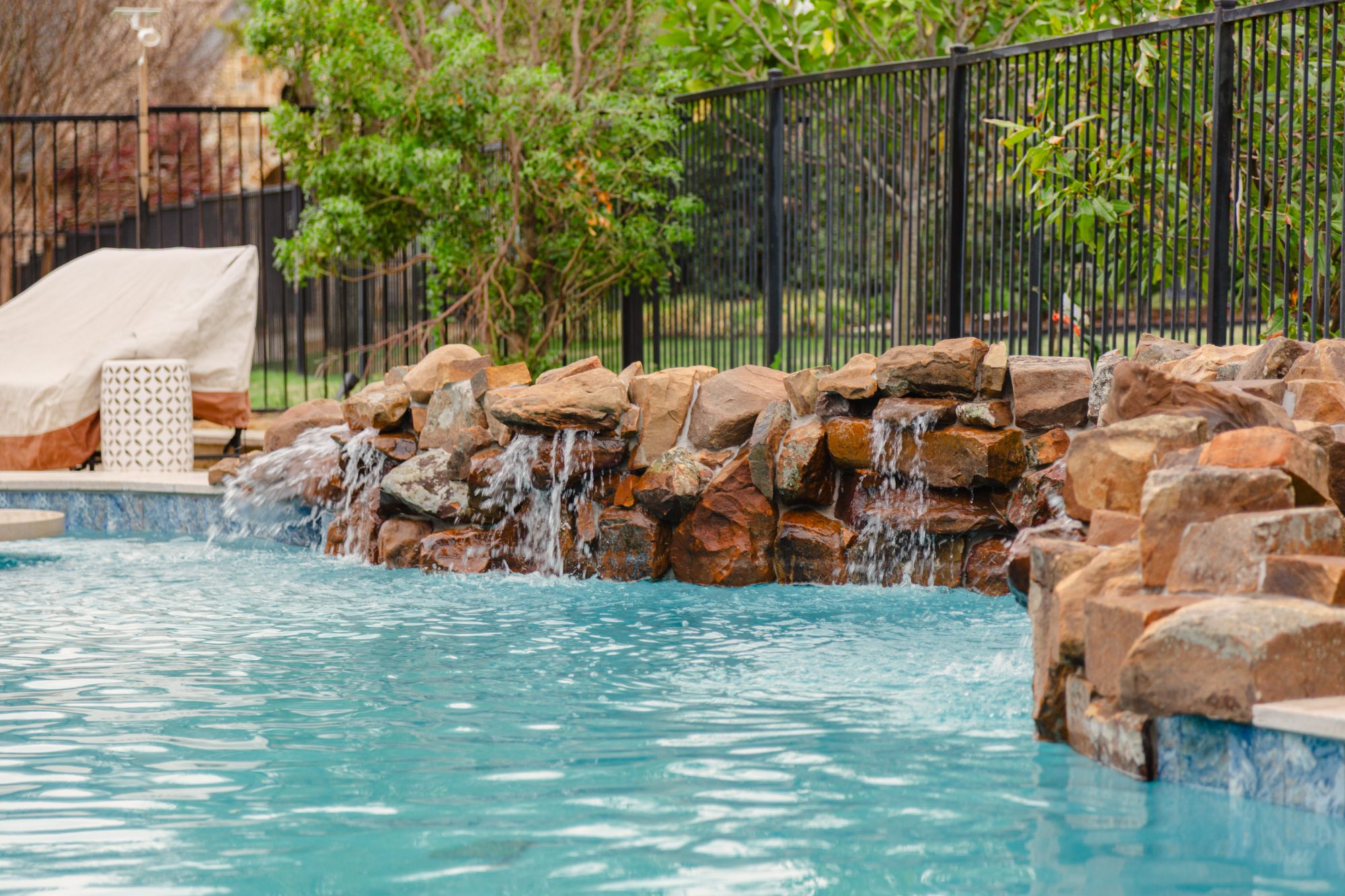
Natural rock waterfalls are built from real or faux boulders stacked and mortared to create a natural-looking formation with water flowing over and through the rocks. The scale ranges from a modest 3-foot cascade to a 10-foot-plus formation with a grotto (a cave-like space behind the waterfall where you can sit).
Rock waterfalls lean toward a more natural, resort, or tropical aesthetic. They work well with freeform pool shapes, natural stone decking, and landscaping-heavy designs. The construction involves structural engineering (the rock formation needs to support its own weight plus water pressure), dedicated plumbing, and careful boulder placement so the water flows look natural rather than forced.
Bubblers and Deck Jets
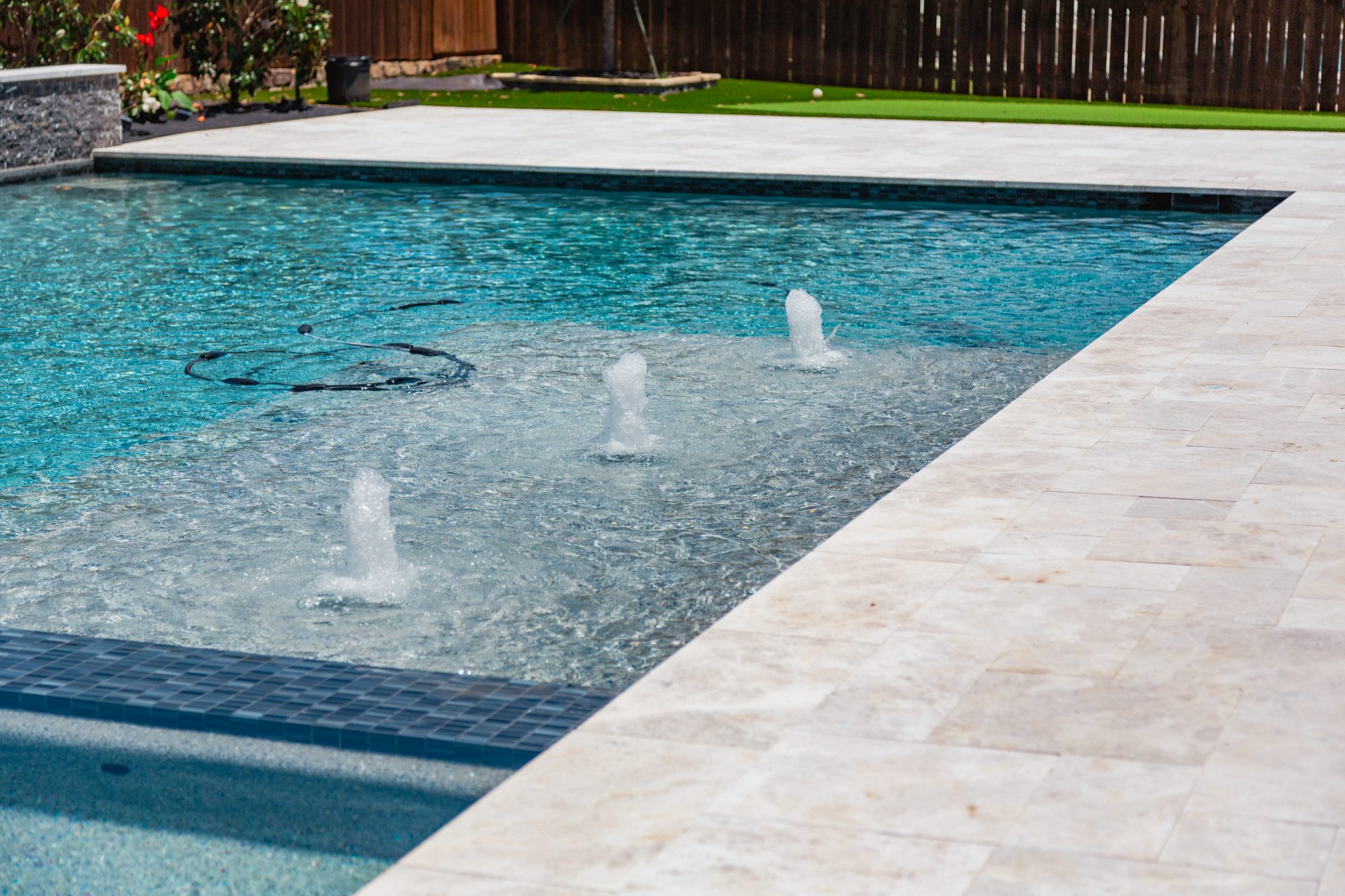
Bubblers are small nozzles installed flush with the tanning ledge or pool floor that push gentle columns of water a few inches into the air. They're subtle, playful, and popular on tanning ledges (also called Baja shelves) where you want movement without splashing.
Deck jets (also called laminar jets) are installed in the pool deck and shoot smooth, arced streams of water into the pool. They can be clear laminar arcs (glass-like streams) or aerated arcs (white, frothy streams). LED-lit laminar jets create colored arcs that look spectacular at night.
Both bubblers and deck jets are relatively affordable add-ons. They run off your main pump system (with dedicated valves) and don't require a separate pump in most cases. They're one of the easiest water features to add during construction — and one of the hardest to retrofit after the fact, since the plumbing runs under the deck.
Scuppers
Scuppers are open channels or spouts built into a raised wall that pour water into the pool. Think of them as architectural versions of a waterfall — clean, controlled streams from rectangular or square openings in stone, tile, or concrete walls.
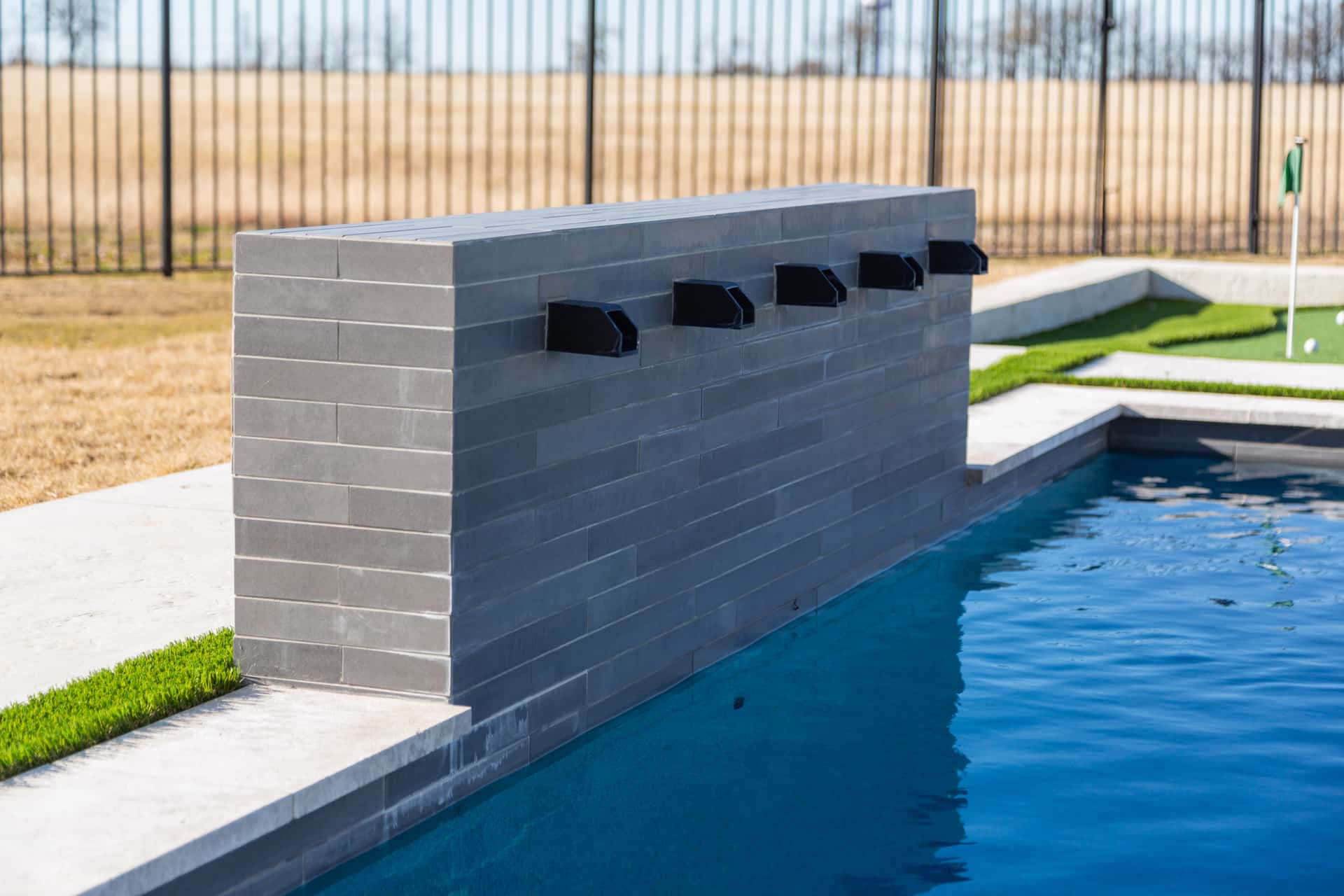
Scuppers work well on raised bond beams, spa walls, and feature walls. They can be spaced evenly for a formal look or clustered for a more dramatic effect. The water flow on each scupper is controlled by its own valve, so you can run all of them or just a few depending on the mood.
How Water Features Integrate with Pool Design
Placement and Layout
Water features work best when they're designed into the pool from the start — not added as an afterthought. Here's what matters:
- Sight lines. Position the primary water feature where it's visible from the main gathering areas — the patio, the outdoor kitchen, and the windows of the house. If you're going to invest in a rain wall or sheer descents, make sure you can see them from where you actually spend time.
- Sound. Water features create ambient noise. For most homeowners, that's a benefit — it masks street noise and creates a spa-like atmosphere. But placement matters. A rock waterfall next to the outdoor dining table might be too loud for conversation. A sheer descent across the pool is audible without being overwhelming.
- Wind. North Texas gets wind. Sheer descents and laminar jets are more affected by wind than bubblers or scuppers. We account for prevailing wind direction when recommending placement — you don't want a beautiful arc of water blowing sideways onto your deck furniture every afternoon.
Night Lighting
This is where water features go from "nice" to "showstopper." Every water feature we install is designed with LED lighting in mind. Options include:
- Backlit sheer descents — color-changing LEDs mounted behind the water sheet create a glowing curtain effect
- Underwater LED spots aimed at spillover edges and waterfall faces
- LED laminar jets that project colored arcs of light through the water stream
- Bubbler LEDs that turn tanning ledge bubblers into glowing fountains
- Landscape lighting aimed at rock waterfalls to create shadow and texture
We program water features and lighting into the pool automation system so you can create scenes — "Relaxation" mode with a single blue-lit sheer descent, or "Party" mode with all jets, full-color rotation, and the spa spillover running.
Cost Factors
We don't quote exact prices without seeing your lot and understanding your design — every project is different. But here are the factors that move the number:
Scale and Complexity
A pair of deck jets is a fraction of the cost of a full rock waterfall with grotto. The range between the simplest and most elaborate water features is significant. Small additions like bubblers and scuppers can be incorporated into most budgets. Large features like rain walls and rock formations are statement investments.
Plumbing and Pumps
Simple features (bubblers, deck jets, a single sheer descent) can often run off your main pump with dedicated valves. More complex setups (multiple sheer descents, rain walls, rock waterfalls) typically need a dedicated auxiliary pump. Each additional pump means more electrical work, more plumbing, and a larger equipment pad.
Material and Finish
A sheer descent mounted in a clean stucco wall costs less than one built into a natural stone veneer wall. Rock waterfalls using manufactured boulders cost less than those using hand-selected natural stone. The wall material, coping, and tile surrounding the feature all factor into the total.
Automation
Manual valves are the simplest and cheapest way to control water features — but that means walking to the equipment pad to turn them on. Actuator valves with automation let you control each feature from your phone or a wall panel. The convenience is worth it for most homeowners, but it adds cost per valve.
Maintenance Considerations
Water features don't require much ongoing maintenance beyond the pool itself, but there are a few things to keep in mind:
- Pump runtime. Water features only run when their pump (or valve) is active. You don't need to run them 24/7 — most homeowners run water features during the hours they're home and enjoying the pool. Automation makes this effortless with scheduled scenes.
- Calcium and mineral buildup. In North Texas, our water is hard. Over time, calcium deposits build up on sheer descent lips, scupper openings, and rock surfaces. Annual cleaning with a mild acid wash keeps everything flowing cleanly. This is standard pool maintenance — not a special concern.
- Winterization. Pool water features should be winterized properly during the handful of freeze events we get each year. For most systems, this means draining the lines or running the pump during freeze warnings. Your automation system can handle this automatically with a freeze protection setting.
- Deck jet covers. Flush-mounted deck jets should have covers when not in use to prevent debris from clogging the nozzles. Most deck jet systems include brass or stainless covers.
See Them in Person
Photos and descriptions only go so far. Water features are experiential — the sound, the movement, the way light plays through the water — you need to see and hear them to know which ones resonate with you.
Our showroom on Preston Road in Frisco has working water feature displays so you can see sheer descents, bubblers, scuppers, and LED systems in action. It's the fastest way to narrow down your choices and understand the scale and sound of each option.
If you're considering water features for a new pool or an outdoor living project, schedule a design consultation and let's talk through what would work best for your space. We'll visit your lot, understand your vision, and design something that sounds as good as it looks.